What is ADHD Paralysis? Here's how to work with and around it, taking baby steps to reach your productivity goal.

8 min read
Three hours. Same blank doc. Deadline tomorrow.
You know what you need to do. You can practically picture the finished essay. And yet your hands won't move. Your brain is, somehow, simultaneously racing and stuck in wet cement. If that scene feels weirdly specific, welcome. You've just met ADHD paralysis, which is the unpleasant, very real experience of executive dysfunction that a lot of students with ADHD know way too well.
Maybe you've noticed the paradox already. You can binge-watch a documentary on medieval cheese-making for six hours, no problem. But opening a Google Doc to write 500 words on something you actually enjoy? Impossible. This post is about why that happens, why it isn't your fault, and the one approach (tiny, annoyingly simple) that tends to unstick people when nothing else does.
ADHD Paralysis Looks Like Hitting an Invisible Wall
First thing to get out of the way: ADHD paralysis isn't laziness. It isn't a motivation issue. It definitely isn't a character flaw. It's a neurological response, plain and simple. Your brain is reacting to a task it reads as boring, ambiguous, overwhelming, or low on dopamine. When those signals add up, the system protects itself by freezing. Even when you desperately want to move.
Why Your Brain Refuses to Cooperate on Boring or Large Tasks
Here's the part most productivity advice misses. The ADHD brain runs on an interest-based nervous system, not an importance-based one. Neurotypical brains can usually grind through tedious work because "this matters" is enough of a signal. ADHD brains need a different cocktail. Novelty. Urgency. Challenge. Interest. Take all four away and executive dysfunction walks in the door.
That's why a 12-page research paper can feel physically impossible to start. Meanwhile, re-organizing your entire bedroom at 11pm the night before that same paper is due feels, somehow, completely doable. Your brain isn't broken. It's just wired differently.
The Feeling of Not Knowing Where to Start With a Massive Uni Assignment
Big assignments are the worst, and there's a reason. They're vague. "Write a 3,000-word essay on globalization" isn't really a task at all. It's a project containing dozens of sub-tasks your brain has to invent, sequence, and prioritize on the fly. That's a lot of executive function, asked all at once. Of course the shutdown happens.
You're not avoiding the work. You're avoiding the decision-making pile that sits on top of it.
You Don't Have to Do It All at Once
Here's the mindset shift that actually moves the needle. Stop trying to "do the assignment." You don't need to. All you need is the next physical action. Full stop.
Why "Doing Just One Thing" Stops You From Skipping Details
When you tell yourself "I'll write the whole essay tonight," your brain sees a mountain. When you tell yourself "I'll open the brief and read the first line," your brain sees a pebble. Pebbles don't trigger paralysis. Mountains do.
There's a hidden bonus here too. By slowing down to one action at a time, you stop skipping the fiddly stuff. The rubric. The citation style. The word count cap. You know, all the things that usually get missed in a 3am panic session.
The Technique of Breaking Tasks Into Micro-Steps to Trick Your Brain Into Starting
Micro-steps are smaller than you think they should be. A good one passes the "could a tired toddler do this?" test. Seriously. Try these:
Open laptop.
Click on the assignment brief.
Read one paragraph. Just one.
Highlight one keyword.
Type one sentence. Even a bad one. Especially a bad one.
The magic isn't in the steps. It's in the momentum. Once your brain clocks that you've already started, the dopamine loop starts doing its thing and suddenly continuing feels possible.
A Checklist to Get Things Done
Okay, practical part. Here's what to actually do next time you're frozen in front of a deadline.
Identify Just the Very First Step
Don't write a massive to-do list. Don't build a Notion dashboard. Don't colour-code anything (I know, I know, colour-coding is fun). Just find the one physical movement that begins the task. "Open laptop." "Find the email from my prof." "Pull up a blank doc." Make it stupidly, embarrassingly small.
Schedule Work Based on Your Actual Energy Levels, Not Your Ideal Ones
Your "ideal" self studies at 7am after a green smoothie. Your real self peaks at 10pm after three episodes of a comfort show. Stop planning for the ideal self. It isn't coming. Track when you actually feel alert this week and defend those windows for hard tasks. Admin and reading can live in your low-energy hours. They don't need your best brain.
Use the "Two-Minute Door"
Anything that takes under two minutes, do it immediately. This clears the background clutter that often blocks bigger tasks.
Externalize the Plan
Write your micro-steps somewhere visible. Sticky note. Phone screen. Whiteboard. ADHD brains are terrible at holding sequences in working memory, so putting the next step in physical space removes one more decision the brain has to make.
Forgive Yourself for the Slow Start
Starting at all is the win. Don't measure your output against a neurotypical timeline. You showed up. That's the hard part.
How STU Helps: Your Partner in Task Breakdown
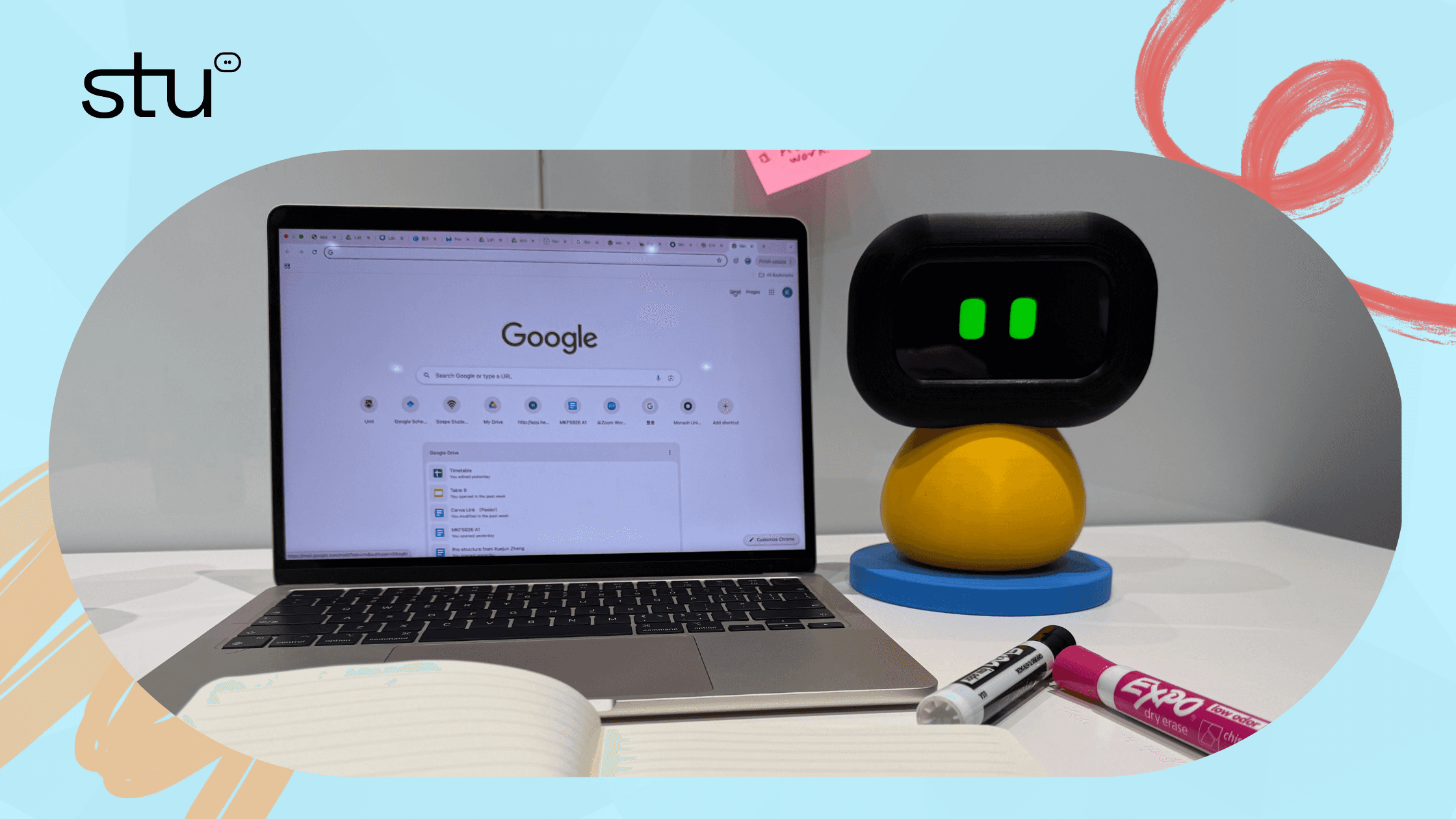
This is exactly the gap STU was built to fill. Most productivity apps assume you already know how to break a task down. They just give you a box to type it into. STU does the breaking down with you.
STU Breaks Down Complex Tasks Into Manageable Steps for You
Drop a messy assignment brief into STU and it reads it with you, pulls out the requirements, and turns them into a sequence your brain can actually act on. No more staring at "write essay" wondering where to begin. Instead you get "step 1: pick a thesis question," "step 2: find three sources," "step 3: outline the intro," and so on. Small. Sequenced. Doable.
It Schedules Events to Help You Overcome Task Paralysis Without the Pressure
STU plans around your real energy patterns, not the fantasy ones. It nudges gently. Breaks deadlines into checkpoints. Reschedules without judgment when life happens (and life will happen). The goal isn't to push you harder. The goal is to make starting easier. That's the whole idea.
Final Thought: Starting Is the Skill
ADHD paralysis isn't something you "cure." You learn to work with it. The students who do well at university with ADHD aren't the ones who never freeze. They're the ones who figured out that the first 30 seconds are the hardest part, and that micro-steps are the cheat code.
You don't need a better work ethic. You need a smaller starting line.
RELATED ARTICLES
The Best ADHD Study Tools That Actually Understand ADHD
9 min read

How to Survive ADHD Burnout? Managing Energy, Not Time
7 min read

If It's Not Written Down, It Doesn't Exist: The Power of the Brain Dump
8 min read
Body-Doubling : A Secret Recipe to Finishing Coursework
7 min read
ADHD Body Doubling: The Company We Keep When We Work
4 min read
How to Turn Your ADHD Into a Superpower
1 min read